
Key Takeaways
- The Barclays AT1 call highlights how disciplined credit selection in quality issuers can deliver strong income and total returns, even through market volatility.
- High-yield AT1 notes reward investors for taking on structural risks, but understanding these mechanics is key to achieving stable long-term returns.
- Today’s elevated yields create a rare window for investors to lock in strong income from reputable issuers before monetary policy shifts lower rates.
- Strategically adding high-quality high-yield bonds like AT1s can strengthen portfolio income, enhance total return potential, and diversify risk in a changing market.
Barclays AT1 Call Announcement
Barclays announced the call of its 7.75% Perpetual Additional Tier 1 (AT1) Capital Note with a September 15, 2023 call date. This means that noteholders would receive their principal (i.e., face value) along with the interest earned between June 2023 and September 2023. Today, we review how the note performed, refresh our understanding of the asset class, and evaluate potential replacement options.
This call announcement shows how investors are still getting high returns from good issuers.
In a high-yield environment, these instruments are appealing because they return the principal along with strong income. As markets change, it becomes more and more important to look at similar high-yield opportunities when deciding where to put your money.
Performance of the Note and High Yields
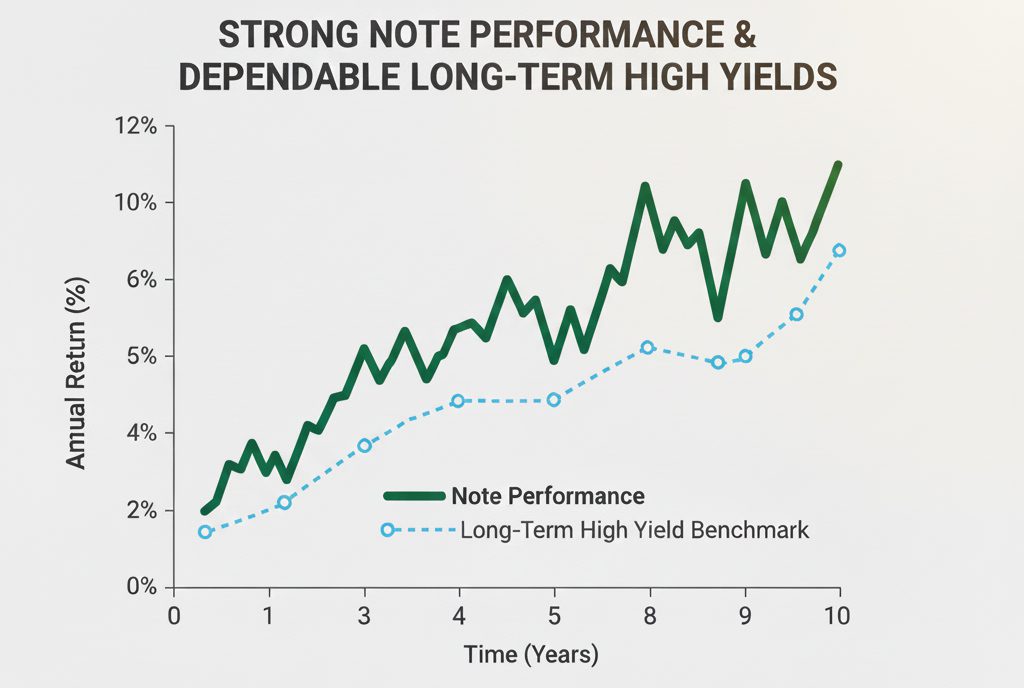
The note was issued in 2018 and traded at a high of 111.6, a low of 77.5 and an average price of 102.6. The note performed very well– delivering consistent income at an attractive rate from an issuer of high credit quality.
The long-term performance clearly reflects how high yields can enhance total returns when combined with strong issuer fundamentals. Periods of price volatility were offset by the compelling income stream generated throughout the life of the note.
For investors searching for dependable high yields, this example reinforces the value of disciplined credit selection.
Why the Coupon Rate Was So High and the Role of Competitive
How was it possible to get a 7.75% coupon from a BBB+ (S&P) rated issuer? Higher yields and coupons typically accompany AT1 notes. This is because of specific terms and conditions that create additional risks for investors. AT1 notes sit right above equity holders in the capital structure (i.e., they are deeply subordinated forms of debt).
The notes combine features of debt and equity and are treated as “hybrid” instruments. For example, many of these notes can be converted into equity if the bank’s capital ratios fall below a certain level.
Similarly, the regulator can force the bank to withhold principal or interest payments if the solvency of the institution is at risk. The notes are undated / have no official maturity date. Rather, they have a series of call dates at which the issuer can elect to repay bondholders.
Whether or not the note is called is a function of the interest rate and regulatory environment at the time. For these additional risks – the noteholder receives a higher return.
These features help explain why some bonds can offer high yields even when their credit ratings appear relatively strong. For investors who are comfortable with certain structural risks, these instruments provide higher coupon payments that often outperform traditional bank bonds.
But it’s important to know how these structures work. Investors can get higher yields on purpose without taking on risks they didn’t expect if they understand how the mechanics work.
Purpose and Evolution of AT1 Notes and Access to High Yields
Additional tier 1 notes were issued to help banks and credit unions increase their capital base to better withstand future volatility and crises. They came about after the Great Financial Crisis of 2008 and have remained a key tool to help banks achieve compliance with Basel III.
The terms and conditions governing the notes have evolved since 2008 but the key principles largely remain the same. The fine print in the legal documentation and the regulatory environment will affect the performance of the note and the risks faced by noteholders. It is important for institutions to conduct rigorous analysis and stay up to date on the dynamic regulatory rules affecting the banks.
Current Market Environment and Today’s High Yields
It’s an exceptional time to be holding cash and looking for new investment opportunities. Bond yields are at levels not seen in many years, creating a rare window for investors.
Here’s what the current landscape looks like:
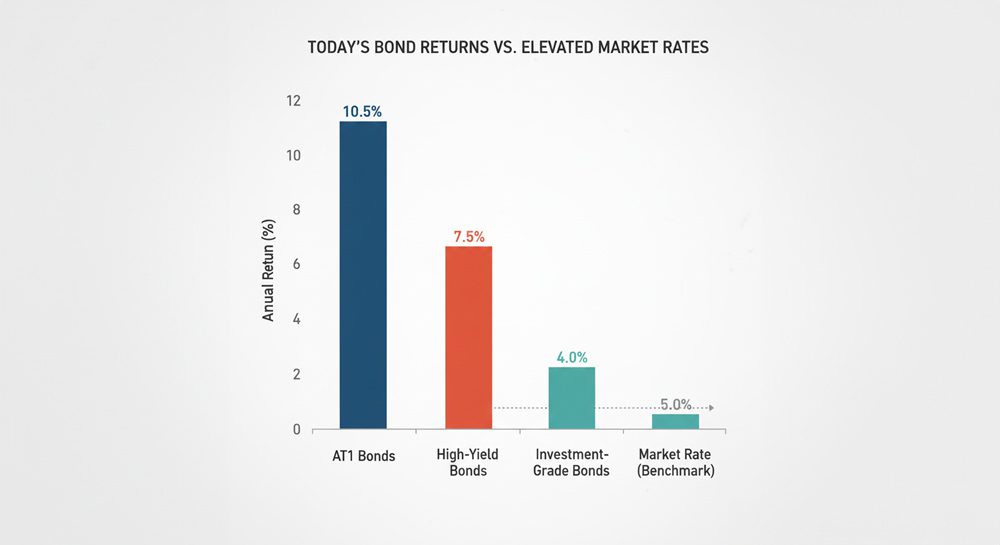
- High-quality AT1 bonds: yielding 8% to 11%
- Investment grade plain-vanilla bonds: typically yield 4% to 6%
- High-yield (junk) plain-vanilla bonds: generally offer 7% to 9%
Note: These ranges are general guides. Individual securities may fall outside them, but they help illustrate how attractive AT1 yields are today.
Why This Matters for Investors Looking for The Highest Yield
- Yields are elevated across the market, giving investors the chance to lock in strong long-term income.
- High-quality issuers are offering yields that historically required taking far more credit risk.
- These conditions may not last. As monetary policy shifts, yields could decline—reducing future income potential.
High-Yield Accounts and Portfolio Strategy
High yields play a crucial role in shaping income-orientated portfolio strategies.
By incorporating instruments that consistently deliver high yields, investors can strengthen both cash flow and total return potential.
Allocating selectively to high-yield opportunities helps balance risk while improving overall portfolio efficiency.
Ready to put high-yield opportunities to work in your portfolio? Explore Sterling’s high-yield investment solutions and start growing your money with confidence.
FAQs
What Are AT1 Notes, and Why Were They Created?
AT1 notes were introduced after the 2008 financial crisis to strengthen banks’ capital buffers and improve financial stability. They remain a key component of Basel III regulatory requirements.
How Does The Current Market Environment Support Stronger Portfolio Income Through High Yields?
Yields across the bond market are at multi-year highs. This allows investors to lock in significantly better long-term income and savings account rates, especially from reputable issuers. Allocating strategically to high-yielding instruments like AT1s can enhance cash flow and improve overall portfolio efficiency, particularly before interest begins to decline and the rate cuts.
Are High Yields From AT1s Still Available in 2025?
Yes. In the current market, high-quality AT1 bonds frequently yield 8% to 11%, which is significantly above investment-grade plain-vanilla bonds. Competitive rates have created a rare window for securing long-term income from reputable issuers at yields not seen in years.
How Can High Yields Improve My Portfolio Strategy Going Forward?
High-yield instruments, especially when chosen selectively can boost both cash flow and total return potential. By incorporating dependable high-yield sources like AT1s, investors can strengthen income streams, diversify risk, and capture yield levels that may not be available once market conditions shift.
From The Sterling Team
Marian Ross is Vice President, Trading & Investment at Sterling Asset Management. Sterling provides financial advice and instruments in U.S. dollars and other hard currencies to the corporate, individual and institutional investor.
Visit our website at www.sterling.com.jm
Speak with a Sterling Advisor